
Wormwood
Reflections on a Shattered Nation

What Never Was and Never Will Be
I started teaching at Chaminade High School in Mineola, L.I. in the Fall of 1966. I taught five classes of fifty students per class, moderated the senior class, the students’ yearbook, and student newspaper. I also acted as hall and lunchroom monitor between classes. My salary was $4500.00 for the year, a paltry amount even then, justified, I suspected, by the penurious clerical administrators’ unspoken principle that teachers should be grateful they were being paid at all.
Once I stepped into the classroom, I hadn’t accounted for the possibility that I would be nervous and fearful. So I frenetically prepared lectures to fill the fifty minutes of each class. By late afternoon, my voice and I were worn out. I didn’t think teaching would be this difficult.
Help came from my department Head, Brother Richard Geraghty. While visiting one of my classes as part of an early evaluation, he. . .uh. . .fell asleep. Students noticed this and, to my chagrin, began laughing, though not loud enough to waken him. When the bell finally rang announcing the end of class, the students filed out quietly, while my evaluator rubbed the sleep from his eyes.
When he approached me with his post-mortem, he said. “What you’re saying is fine, but you’re working too hard, talking and telling too much. Get your students involved, get them invested, get them talking and discovering. It will be more fun for them, and less work for you. Maybe you’ll have fun too.”
Brother Richard’s words guided my approach to every class for the next fifty-two years. His words reminded me that all of my best teachers from childhood on, engaged and included their students in the learning enterprise, teasing their desire to pursue the whys and hows behind the topics they presented for discussion, questioning easy answers, getting comfortable with ambiguities, making choices. Developing critical thinking and making it a habit of mind.
Years later, for example, I began my Shakespeare class with Midsummer Night’s Dream. This wonderful play features multiple plots showing that “the course of true love never did run smooth.” The theme is repeated among five sets of lovers in which the women get the worst of it in each plot. [See plot Summary below.1]
Before discussing the content of the entire play, I would ask three student volunteers to perform in front of class, the first 19 lines of the play. [Watching their fellow students perform before class usually elicited interest.] Scene completed, I would ask the class questions describing the occasion, the nature of the relationship between Theseus and Hippolyta, and how that would be demonstrated in costuming, voice, gestures, casting, spatial designations. I would then ask the student actors to approximate the various suggestions put forward by fellow students.
SCENE I. Athens. The palace of THESEUS.
Enter THESEUS, HIPPOLYTA, PHILOSTRATE, and Attendants
THESEUS
Now, fair Hippolyta, our nuptial hour
Draws on apace; four happy days bring in
Another moon: but, O, methinks, how slow
This old moon wanes! she lingers my desires,
Like to a step-dame or a dowager
Long withering out a young man’s revenue.
HIPPOLYTA
Four days will quickly steep themselves in night;
Four nights will quickly dream away the time;
And then the moon, like to a silver bow
New-bent in heaven, shall behold the night
Of our solemnities.
THESEUS
Go, Philostrate,
Stir up the Athenian youth to merriments;
Awake the pert and nimble spirit of mirth;
Turn melancholy forth to funerals;
The pale companion is not for our pomp.Exit PHILOSTRATE
Hippolyta, I woo’d thee with my sword,
And won thy love, doing thee injuries;
But I will wed thee in another key,
With pomp, with triumph and with revelling.
These lines tell us that Theseus is a powerful ruler. He is infatuated with the Amazon Queen Hippolyta whom he is anxious to marry after having defeated her in battle and made his captive. Her response is measured and somewhat opaque.
I then asked students a series of questions about the text and how it might be produced:
What is the nature of the relationship between Theseus and Hippolyta? How is it revealed? Is she as anxious to marry as Theseus? Does she love him? As taken with him as he is with her? Is she indifferent? hostile? Are there any clues considering what happens in man/woman relationships in the rest of the play? How might the moon be a useful symbol in this play?
Defend your choice by imagining how each of them are cast and costumed, especially Hippolyta? Would she be delicate, demure, and dressed in a lush feminine outfit? Or, would she be taller, athletic, dressed in clothes suitable to a warrior queen? Leather? Military garb?
How would their speaking reveal their feelings? How would they locate themselves spatially to indicate their feelings, one toward the other? What sorts of facial expressions and gestures might perform the same characterization?
In my experience, when students are asked to leave their seats and participate physically in an intellectual exercise, the likelihood is that the material will have a more immediate impact. Then, using the acting exercise to stimulate discussion or debate about how their ideas may be realized in time and space invests most students in the material, material they otherwise might have found tedious.
I taught over thirty thousand students during my long career. If they remember the fine details about any of the literature in my syllabi, I would be pleasantly surprised. My greater hope, however, is that they left my classes with a capacity to appreciate ambiguity, to challenge simplistic thought, easy orthodoxy, and unquestioned authority, to appreciate the life of the mind and not be embarrassed to be an intellectual.
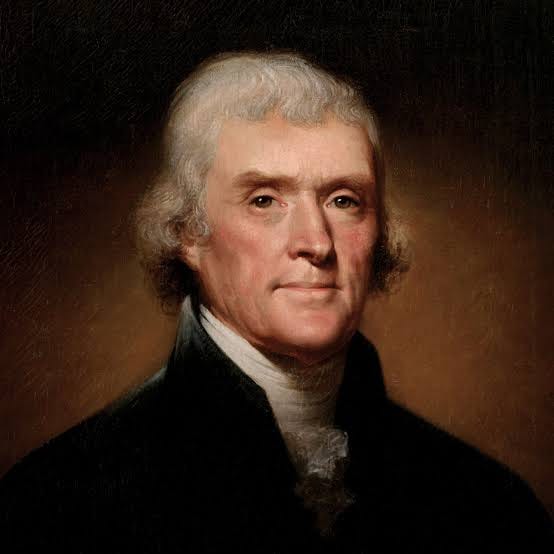
Such critical thinking also enables a person to be a better citizen and protector of democracy. As Jefferson in a letter to William C. Jarvis in 1820, famously stated, "If a nation expects to be ignorant and free, in a state of civilization, it expects what never was and never will be." Jefferson viewed ignorance as a threat to liberty, arguing that an educated public is better equipped to make informed decisions about governance and to hold their leaders accountable.2
https://www.bbc.co.uk/bitesize/articles/z6x48hv#zx79jfr
https://usahistorytimeline.com/pages/thomas-jefferson-s-views-on-education-building-a-nation-of-informed-citizens-c79ca522.php
I, too, taught for several decades at the college level. I was intellectually insecure, and the idea of standing at the lectern and spreading my wisdom seemed so impowering. Then, as Dr. Shaw describes, I realized that I was encouraging bad habits all around: my self-contained lectures made me feel important but and relieved the students of accountability.
Ironically, it wasn't until I left academia and began teaching adults that I realized the power of the question. Powerful questions prompt powerful learning and engagement.
As Dr. Shaw so readily suggests, the MAGA world isn't interested in owning their own thoughts; they've given over that responsibility to Trump. YouTube is full of clips of what happens when you ask a MAGA a question: virtually 100% of the time, what you hear is nonsense. It's not that their idea is wrong, it's that they have no idea at all, just some half-baked but confidently delivered assertion that they half heard last week on Fox. The frightening shame is that they don't give a shit.