
Wormwood
Reflections on a Shattered Nation
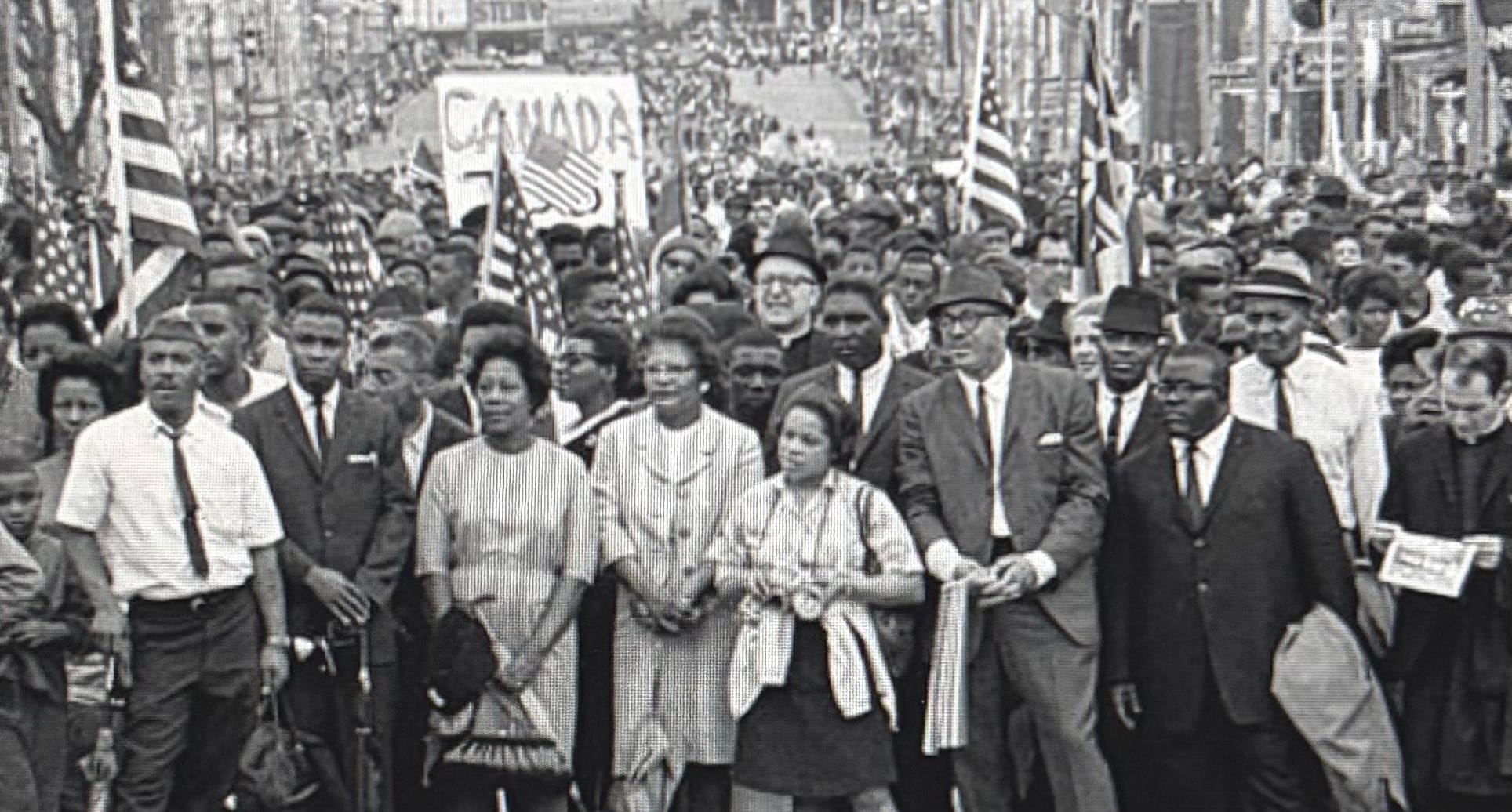
Whose streets? Our streets! Whose votes? Our votes! Keep on marching!
Remebering Selma-to-Montgomery (March 25, 1965) on the Occasion of No Kings (March 28, 2026)
by John K. Bollard
In March, 1965, sixty-one years ago, I was an undergraduate at the University of Rochester, when I received a phone call from Robert E. Hood, an Episcopal priest I knew from New York. “Hello, John,” he said. “We are having another march from Selma to Montgomery. Could you come join us?” I could, and I did. I left Rochester on March 23rd for a thirty-hour bus ride.
https://thisdayofhistory.com/2026/03/24/march-25-1965-the-march-from-selma-to-montgomery/
We stopped at several cities along the way, but only one stop has stayed in my mind. Around mid-day on the 24th we pulled into the Birmingham, Alabama, bus terminal for an hour’s layover. I went inside, took a stool at the lunch counter, and ordered a hot dog. However much it cost, the change was fifty cents. The white woman behind the counter took one of the newly minted half dollars out of the cash register and tossed it onto the counter, heads up. “There’s your picture of Kennedy,” she said. “Paint it black.” As I ate, I noticed an elderly man, sitting up but asleep on a waiting room bench. A policeman on his rounds kicked him in the leg, none too gently. The cop said something and the man shambled out the door onto the street. Clearly no lone, tired, down-and-out person without a ticket was allowed to rest there. I wondered would happen if I fell asleep on that bench. Whether I had a conscious purpose or not, I finished eating and moved over to the bench. And soon enough, not surprisingly after a long, uncomfortable night on a bus, I too fell asleep.
A sharp kick to my foot woke me, and I saw that same policeman looking down at me with a frown.
“What’s your name?”
“John Bollard.”
“Where are you going?”
“Montgomery.”
“Stand up when you talk to me!” I stood up. He was quite a bit taller than I was.
“Where are you coming from?”
“Rochester, New York.”
“Say ‘Sir’ when you speak to me! And take your hands out of your pockets! How do I know you don’t have a knife to stab me with or something? Let me see your ticket.”
“OK…sir.”
I reached into my inside jacket pocket. There was nothing there. I checked my side pockets. Nothing. Then my trouser pockets. No ticket.
“Come with me. You’re under arrest.”
Presumably for loitering or vagrancy or the like, but he didn’t give me a reason. The Miranda warning wouldn’t become law for another fifteen months. He grabbed me firmly by the arm and hustled me out the door, taking me to City Hall, conveniently located across the street. Just as we went up the steps and he reached for the door, I discovered a hole in the bottom of my inside jacket pocket. I ripped it open and poked my hand through. Inside the lining was a piece of paper – my curled up bus ticket.
I held it up, and with a cocky smile and a note of victory that only a foolish, inexperienced young white person would ever voice under such circumstances, I said,
“Oh! Look what I found!”
He looked at the ticket, let go of my arm, and stood in front of me. As he loomed over me, his face got very red and his expression became vicious. I will never forget his last words to me:
“You son of a bitch! I know what you are doing, and we are going to get you!”
I lost the smile, turned around, and walked quickly back to the empty bus and just sat there. A couple of hours later we reached Montgomery. I somehow found my way to a simple frame house where others like me had come to rest before the next day’s march. Spirits were high and there were large pots of rice and greens on the stove. We ate a simple meal and slept on the floor. We missed the celebrity-laden “Stars for Freedom” rally that night, but we had not come to be entertained. In the morning I went out to join the marchers heading from the City of St. Jude campsite toward the state capitol. As they came down the street, it was easy to spot Dr. King in the front rank. Not far behind, in the second rank, I spotted Father Hood. I called to him and waved. He saw me and gestured for me to join him. As I stepped into the street I was blocked by a line of men with their hands joined – tall, sturdy, imposing young men. “You can’t go through,” they said. “No, it’s OK; my friend right there wants me to join him.” I pointed, and Father Hood nodded and gave them the OK. They refused to let me in. Father Hood stepped forward and spoke to Dr. King, who looked over at me, nodded, and told the leader of the security team that I could enter. They remained implacable, however, and refused to break their chain, so I joined the march further back. I was disappointed, but I also appreciated the fact that they were taking no chances in their role as guardians of Dr. King and the other leaders.
In the years since then, I have often remembered those quietly determined men, and I can hardly imagine how furious, heartbroken, and helpless they must have felt that they were not there to protect Dr. King when he was assassinated just three years later. We walked, we talked, and we sang. The crowd of marchers swelled to about 25,000 as it moved up Dexter Avenue toward the state house, and many others, black and white, lined the route, some to observe quietly, some to heckle, some to be downright nasty. Alabama National Guard troops lining the street had been federalized, ostensibly to protect the marchers.
Right ahead of me was a group of white nuns in their black habits, and even I – who had plenty of experience with foul language among boys – even I was appalled at the language the soldiers used to insult and threaten those nuns. Nor were their taunts confined to speech. Some of them spat at the nuns as they passed. The nuns continued quietly on their way. None of us felt very well protected. Robert E. Hood (center, in black) and other clergy, Montgomery, March 25, 1965 We approached the Alabama statehouse, once the first Confederate capitol, at the end of Dexter Avenue, where an ominous line of troopers, representatives of the power of the state, blocked the flight of steps leading up to the even more symbolic marble pile that rose above them. On the street, a flatbed truck served as a speaker’s platform. Andrew Young, Ralph Abernathy, Amelia Browder, and Rosa Parks spoke eloquently and movingly. Oscar Brown, Odetta, Leon Bibb, Joan Baez, Harry Belafonte and others led us in song. And most inspiring, Dr. King mesmerized us with his now famous “How long?” speech. “How long will it take?” he asked and answered, “How long? Not long, because the arc of the moral universe is long, but it bends toward justice.”
Afterward I met up with Father Hood. I thought, somewhat naively perhaps, I would simply walk to the bus terminal and head back to Rochester. But Father Hood didn’t think I should go there alone – or at all. That was the place where Jim Zwerg, a white Freedom Rider, along with John Lewis and others, had been beaten by a mob in 1961 – not to mention the beatings of marchers and the killing of James Reeb just two weeks earlier in Selma. Instead, I was introduced to a black minister and his wife, and they offered to drive me to Birmingham, where I could catch a northbound bus under less exposed conditions. I accepted their invitation, and we started on our way. Also in the car were another black minister and his wife.
We talked some as we rode, but much of the time we just sat pensively. We were away from the city on a stretch of flat, straight highway without much traffic when flashing lights came up from behind. The reverend pulled over and waited. A state trooper walked up, took the reverend’s license, and went back to his patrol car. After a while he returned and told the reverend to get out of the car. He clearly didn’t want the rest of us hearing or witnessing what he said. His most telling question, we learned afterward, was “Who is that in the car with you?” “My wife and some friends.” “You know what I mean! Who is that white boy?” “He is a friend of mine.” “What’s his name?” The reverend didn’t remember my name. Things could easily have gone wrong from here. He came back to the car, asked me my name, and returned. Then the trooper came up. He asked my name and asked me if I was all right or something to that effect. I said I was. Why wouldn’t I be? As the trooper went back to question her husband further, the reverend’s wife said that she didn’t think the trooper would cause us any trouble. Her husband had often been arrested and he had notoriously been beaten while in police custody. He was enough of a well-known public figure that it would not be worth it for that trooper to detain us. At least she hoped that once the trooper radioed in the information about whom he had stopped, he would be told by his superiors to let us go on our way.
And that may be what happened, for the reverend returned, got in the car, and we drove on. I remember nothing else about my return to Rochester. I have forgotten much, but I most deeply regret not remembering the names of that minister, his wife, and his friends, who were so freely willing to risk their own lives to save mine. Am I exaggerating? I don’t think so. That same evening Viola Liuzzo, a white Michigan activist and mother of five, was shot and killed as she drove with a black friend from Montgomery back towards Selma. I have come to understand March 25, 1965, as one of the most important days of my life. For me personally that trip was a statement of my desire to take part in bringing about social change.
But what larger significance might there be to my presence in Montgomery on that day? Among 25,000 people, what difference would one white student make? Yet on a larger scale, each one of those thousands had to make the decision to be there. If I hadn’t gone, if Viola Liuzzo hadn’t gone, if Robert Hood, Jim Leatherer, those nuns, those preachers and their wives, and others like us hadn’t followed Dr. King’s lead, there would not have been a crowd of 25,000, and history might have been quite different. Most importantly, we went as witnesses, not to observe those events, but as participants to bear witness – to testify individually and collectively to our belief in human equality.
This January I returned to Montgomery with my wife and son, Bryn, for a bookstore event in collaboration with the Freedom Rides Museum on the day after Martin Luther King Jr. Day. When people asked me why I came, I would tell them that the last time I was there was March 25, 1965. Just mentioning that date was enough for many of them to thank me for having come then, as well as now. That simple expression of gratitude after six decades is moving evidence of the power of protest and participation. The 2026 MLK Day parade in Montgomery was a joyous celebration, and the service in the Dexter Ave. King Memorial Baptist Church was a call for remembrance and for continued action and bridge building.
The sixty-first anniversary of March 25th has come to remind us to continue protesting whenever the need arises – and that need is here and now. Saturday, March 28th, will be a fine day to bear witness yet again. Whose streets? Our streets! Whose votes? Our votes! Keep on marching!
__________________
Author’s Note:
Above is a revised and updated version of a short piece on my experience at the third Selma to Montgomery March in 1965. Some of you have seen it before, but I have added some newfound photos and appended some brief comments to bring it up to date. Remembering the past is important as we move into the future.
Above all, I encourage you all to make your presence visible and your voice heard whenever and wherever you can in these fraught and parlous days.
Yours for equal rights,
John